
No treatment fully reverses a receding hairline once significant miniaturization has occurred. What treatments can do is slow or halt further progression, and in some cases stimulate regrowth in follicles that are still viable. Here's what the evidence shows.
DHT Blockers — Addressing the Root Cause
Since DHT-driven follicle miniaturization is the underlying mechanism, blocking DHT is the most logical first-line approach.
Natural DHT blockers — Saw palmetto, beta-sitosterol, and pumpkin seed oil have clinical evidence showing mild 5-alpha-reductase inhibition. Well-tolerated with minimal side effects. Modest but real results — best for early-stage recession where preserving the existing hairline is the primary goal.
Finasteride (Propecia) — The gold standard pharmaceutical DHT blocker. A Type 2 5-AR inhibitor with decades of clinical data. Halts progression in the majority of users and produces regrowth in many. Side effects — primarily sexual dysfunction — affect a minority of users. Requires a prescription.
Dutasteride — More potent than finasteride, inhibiting both Type 1 and Type 2 5-AR. Not FDA-approved for hair loss. Greater DHT suppression, longer half-life, used off-label under physician guidance.

Most clinical trials for hair loss treatments run 12–24 months — the minimum time needed to assess meaningful changes in density.
Minoxidil — A Complementary Mechanism
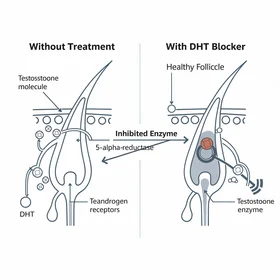
Minoxidil doesn't block DHT. It works by extending the anagen phase and increasing blood flow to follicles. Many men use it alongside a DHT blocker — the mechanisms complement each other. Evidence suggests combined use outperforms either alone.
Hair Transplant Surgery
FUE and FUT relocate DHT-resistant follicles from the back and sides of the scalp to the hairline. Results are permanent for transplanted hairs. Important: a transplant doesn't stop ongoing loss in non-transplanted follicles — most surgeons recommend stabilizing with a DHT blocker before and after. Most appropriate for Stage IV+ with sufficient donor hair.
What Doesn't Work
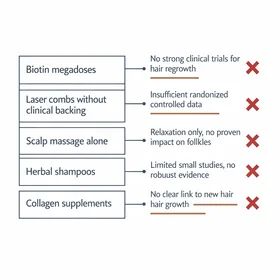
Shampoos marketed as hair loss treatments have no meaningful clinical evidence. Biotin supplements don't address androgenetic alopecia. Essential oil protocols lack clinical support. Laser caps have limited, uncertain evidence.
Setting Realistic Expectations
Treating a receding hairline is about damage control, not reversal — and the earlier you start, the more you have to work with. A man who starts a DHT blocker at Norwood II is in a fundamentally different position than one who waits until Stage V. At early stages, preserving what you have is realistic and achievable. For broader context on male pattern baldness beyond just the hairline — including whether a full cure is possible — baldnesscure.org covers the current state of research. For men over 30 dealing with hair loss alongside other age-related health concerns, Male Modern Health covers the full picture.